- SPECIALIST ORTHOPAEDIC SURGEON | MELBOURNE, VIC | ALBURY, NSW | MORNINGTON, VIC |
- 03 9421 6133

Meniscal tears
Understanding the causes, symptoms, diagnosis, and treatment of torn knee cartilage
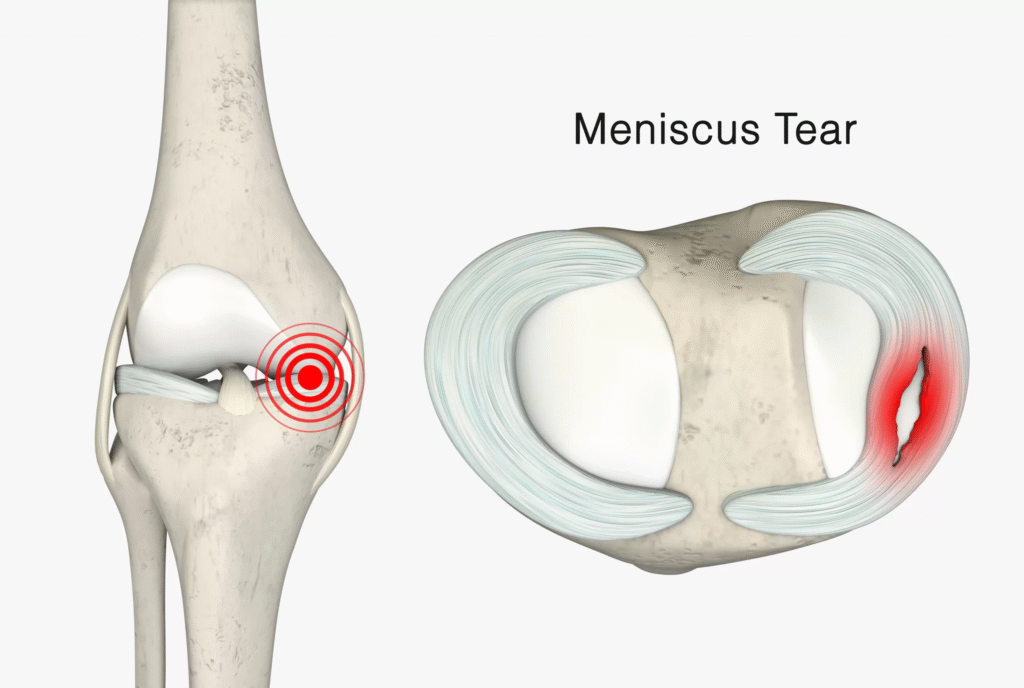
Meniscal tears are one of the most common knee injuries, especially among people who are active in sports or physical work. The meniscus is a vital structure in your knee joint, acting as a shock absorber and stabiliser. When torn, it can cause pain, swelling, and mechanical symptoms such as locking or clicking in the knee.
Tears may occur due to sudden trauma (such as twisting the knee) or develop gradually due to wear and degeneration over time. Treatment depends on the type, size, and location of the tear, as well as your age, activity level, and overall knee health.
This page provides detailed information to help you understand what a meniscal tear is, how it’s diagnosed, and what treatment options are available, including when surgery may be appropriate.
What is the meniscus?
Each knee contains two menisci, one on the inner side (medial meniscus) and one on the outer side (lateral meniscus). These C-shaped cartilage structures sit between the thigh bone (femur) and shin bone (tibia), helping to:
- Distribute weight evenly across the knee
- Absorb shock during movement
- Stabilise the joint
- Protect the underlying cartilage
Healthy menisci are critical to maintaining long-term knee function and joint health.
What causes a meniscal tear?
Meniscal tears can occur for different reasons depending on your age and activity level:
- Traumatic tears usually happen in younger people during sports or high-impact activities, often with a twisting injury or sudden change of direction.
- Degenerative tears are more common in older adults due to gradual cartilage weakening associated with age or underlying osteoarthritis.
- Combined injuries may occur with ligament damage such as an ACL tear, especially in athletes.
Even a simple movement like kneeling, squatting, or standing up awkwardly can cause a tear in a weakened meniscus.
Symptoms of a meniscal tear
Symptoms can vary depending on the size and location of the tear. Common signs include:
- Pain along the joint line (inside or outside of the knee)
- Swelling or stiffness, often within hours or days of the injury
- Clicking, popping, or catching sensations
- A feeling of instability or giving way
- Locking or the inability to fully straighten the knee
Some tears may cause minimal symptoms at first but worsen over time with activity.
In Australian general practice data, the incidence of meniscal tear has been estimated at as high as 6 per 1,000 people per year.
How are meniscal tears diagnosed?
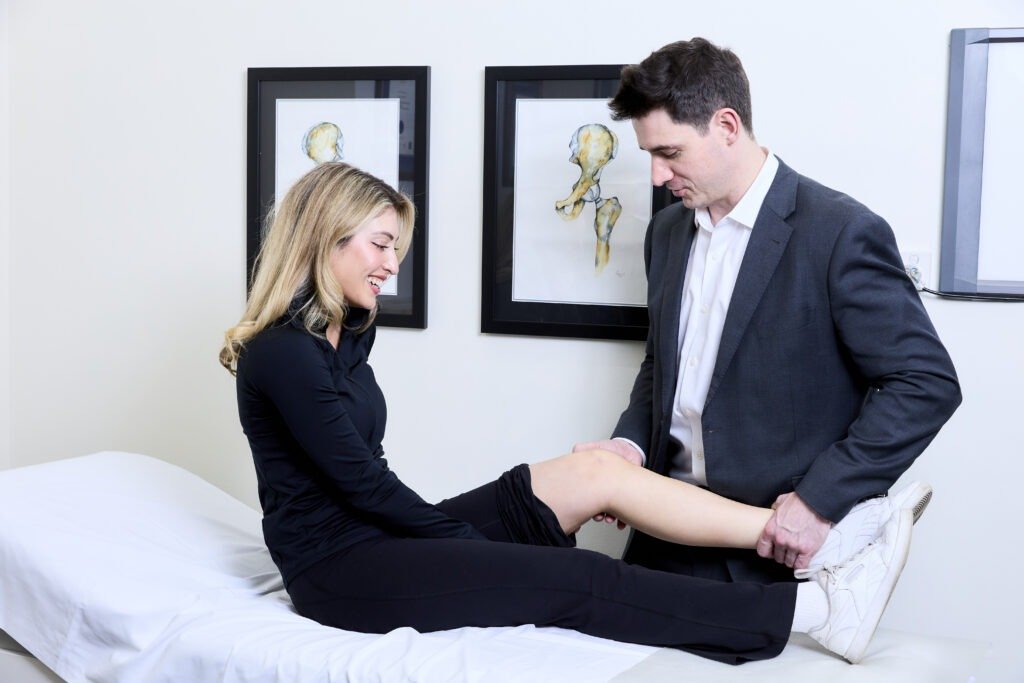
Diagnosis begins with a detailed history and clinical examination by Dr Hockings. Key steps may include:
- Assessment of pain location and movement limitations
- Special tests that stress the meniscus to reproduce symptoms
- Discussion of activity history or previous injuries
Imaging is usually required to confirm the diagnosis:
- X-rays help rule out fractures or arthritis but do not show the meniscus directly
- MRI scans provide a detailed view of the soft tissues and are the most reliable way to visualise the meniscus and any associated injuries
Accurate diagnosis is essential to guide treatment and avoid further damage to the knee joint..
Non-surgical treatment options
Not all meniscal tears require surgery. In many cases, particularly degenerative or small stable tears, symptoms can be managed without an operation.
Non-surgical options may include:
- Physiotherapy to strengthen the muscles around the knee and improve stability
- Activity modification to avoid aggravating movements
- Pain relief medications, such as paracetamol or anti-inflammatory drugs
- Knee braces or compression for support
- Corticosteroid injections in some cases to reduce inflammation and improve comfort
Dr Hockings will assess the tear type, your lifestyle, and response to treatment before recommending surgery.
When is surgery recommended?
Surgery may be considered when:
- The tear causes persistent pain, locking, or mechanical symptoms
- Conservative treatment has not provided sufficient relief
- The tear is in a zone with good blood supply and may be repairable
- There is an associated injury, such as an ACL tear
- You are active and wish to return to sport or physical work
Surgical treatment is typically done using knee arthroscopy, a minimally invasive technique performed through small incisions.
Surgical treatment: meniscal repair or removal?
There are two main surgical options for treating a torn meniscus and Dr Hockings will determine the best approach based on your MRI findings and intraoperative assessment.
- Requires a longer recovery time than removal
- Often involves bracing and restricted weight-bearing during early healing
- Mostly suitable for patients with good tissue quality and appropriate tear patterns
Recovery timelines for Meniscal repair:
- Crutches for 2–4 weeks
- Limited weight-bearing and use of a knee brace initially
- Gradual return to sport in 4–6 months
- Often used for degenerative or complex tears
- Shorter recovery time, with earlier return to activities
- Does not prevent long-term wear (arthritis) in some patients
Recovery timelines for Meniscectomy:
- Crutches for a few days (if needed)
- Walking often resumes within a week
- Return to sport or activity in 4–6 weeks
A structured rehabilitation program with physiotherapy is essential to optimise your recovery and prevent further injury.

If you’re experiencing ongoing pain, stiffness, or reduced movement that is affecting your daily activities or quality of life, a thorough orthopaedic assessment can help determine the cause and guide the most appropriate treatment options for your situation.