- SPECIALIST ORTHOPAEDIC SURGEON | MELBOURNE, VIC | ALBURY, NSW | MORNINGTON, VIC |
- 03 9421 6133

Subvastus Approach Total Knee Replacement
A muscle-sparing surgical approach to support faster recovery and preserve strength
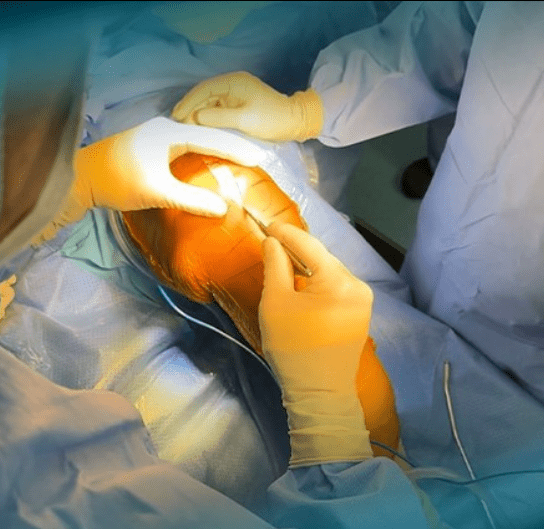
The subvastus approach is a modern, minimally invasive technique used in total knee replacement surgery. Unlike traditional approaches that involve cutting through the quadriceps tendon or muscle, the subvastus approach accesses the knee joint by gently lifting the vastus medialis muscle from underneath. This helps preserve muscle integrity and may support a quicker, less painful recovery.
Dr Jason Hockings routinely uses the subvastus approach when performing total knee replacements, including those with patient-specific instrumentation and kinematic alignment techniques.
What is the subvastus approach?
The subvastus approach is named after the vastus medialis, one of the main muscles on the inner side of your thigh. Instead of cutting through this muscle or the quadriceps tendon, Dr Hockings carefully works underneath it to access the knee joint.
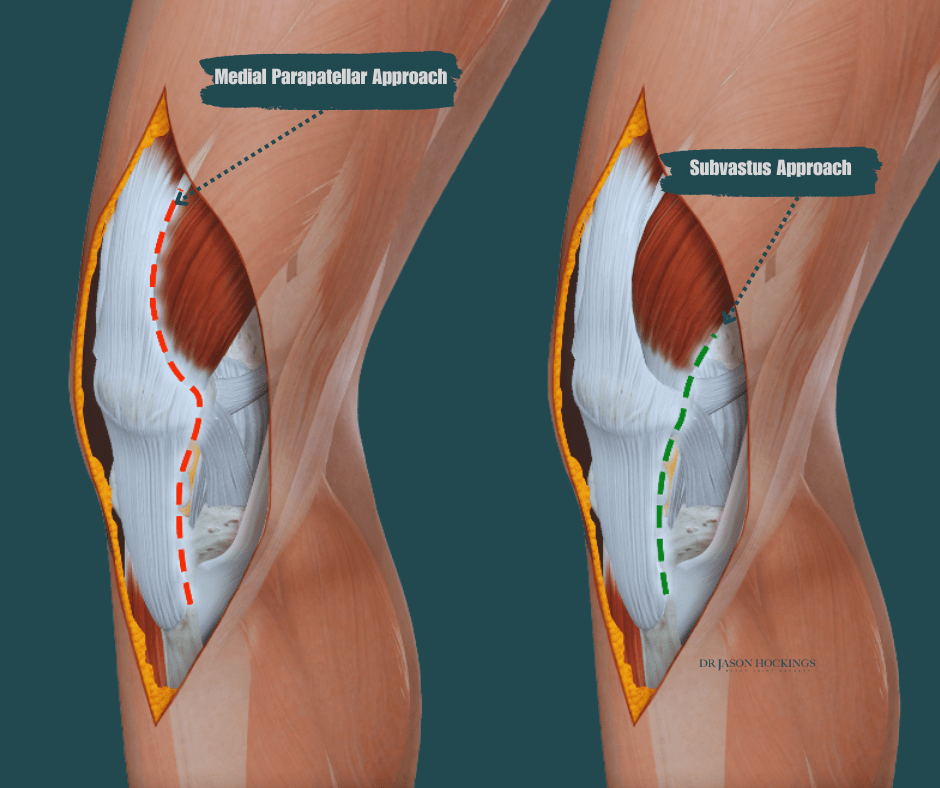
Key differences from traditional approaches:
- No cutting of the quadriceps tendon
- Muscle fibres are preserved and retracted rather than divided
- The kneecap remains in its natural position, reducing soft tissue strain
This technique contrasts with the medial parapatellar approach, which is commonly used in traditional total knee replacements and involves splitting the quadriceps tendon.
Advantages of the subvastus approach
Preserving the quadriceps mechanism has several potential benefits for patients undergoing total knee replacement:
- Faster functional recovery- Because the main thigh muscle is not cut, patients may regain knee strength, walking ability, and independence sooner in the early weeks after surgery.
- Less post-operative pain- Avoiding disruption to the quadriceps tendon may reduce the pain experienced during activities such as walking, straightening the leg, or performing physiotherapy.
- Better knee control – The quadriceps play a key role in stabilising the knee. By preserving this structure, the subvastus approach may support more natural movement and better knee control.
- Reduced risk of kneecap-related complications – Because the patella (kneecap) is not flipped or overly manipulated during surgery, the risk of issues such as patellar maltracking or anterior knee pain may be lower.
Who is suitable for a subvastus approach?
The subvastus approach may be suitable for many patients undergoing primary (first-time) total knee replacement, particularly when preserving the quadriceps muscle is a priority. It may not be appropriate in all cases however, such as in patients with large or muscular thighs, stiff or contracted knees, or those who have had previous surgeries that significantly altered their anatomy.
This approach can be especially beneficial when combined with techniques such as:
This integrated technique supports a smoother, more personalised knee replacement journey. The subvastus approach plays a key role in protecting muscle tissue, which may enhance surgical accuracy, reduce pain, and help you return to daily life more confidently.
If you’re experiencing ongoing pain, stiffness, or reduced movement that is affecting your daily activities or quality of life, a thorough orthopaedic assessment can help determine the cause and guide the most appropriate treatment options for your situation.